Challenge: A turbocharging manufacturing plant needed to reconcile year-end physical inventory with SAP inventory records while minimizing the financial impact of consignment stock adjustments.
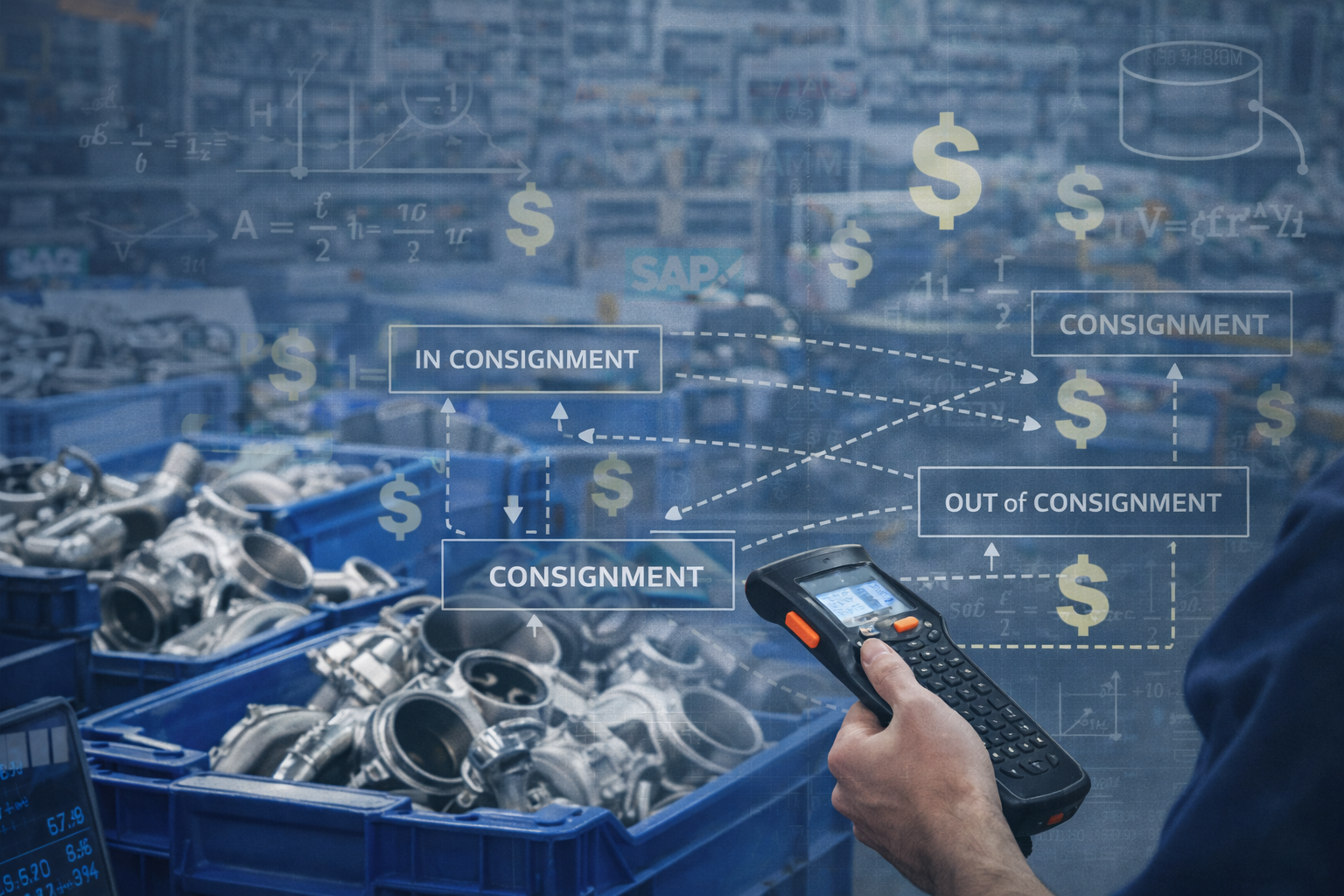
The plant operated with both owned inventory and supplier-owned consignment inventory. During the year, components and finished goods were moved across warehouse locations using barcode scanners, with physical locations mapped to SAP storage locations. In theory, this setup should have kept system records aligned with reality. In practice, however, physical movements were not always scanned consistently. As a result, by year-end, SAP location balances no longer fully matched the physical distribution of stock on the warehouse floor.
This created a costly problem during annual physical inventory reconciliation.
At the end of the fiscal year, the plant had to update SAP records based on the physical count results. Under normal circumstances, this would mean adjusting stock balances by location. However, because part of the inventory was held in consignment, the reconciliation process carried a major financial risk.
If a consignment location showed a shortage after physical counting, updating SAP directly could cause the business to pull that stock out of consignment and recognize it as company-owned inventory. In other words, the plant could end up paying for stock simply because the system and the warehouse had drifted apart operationally during the year.
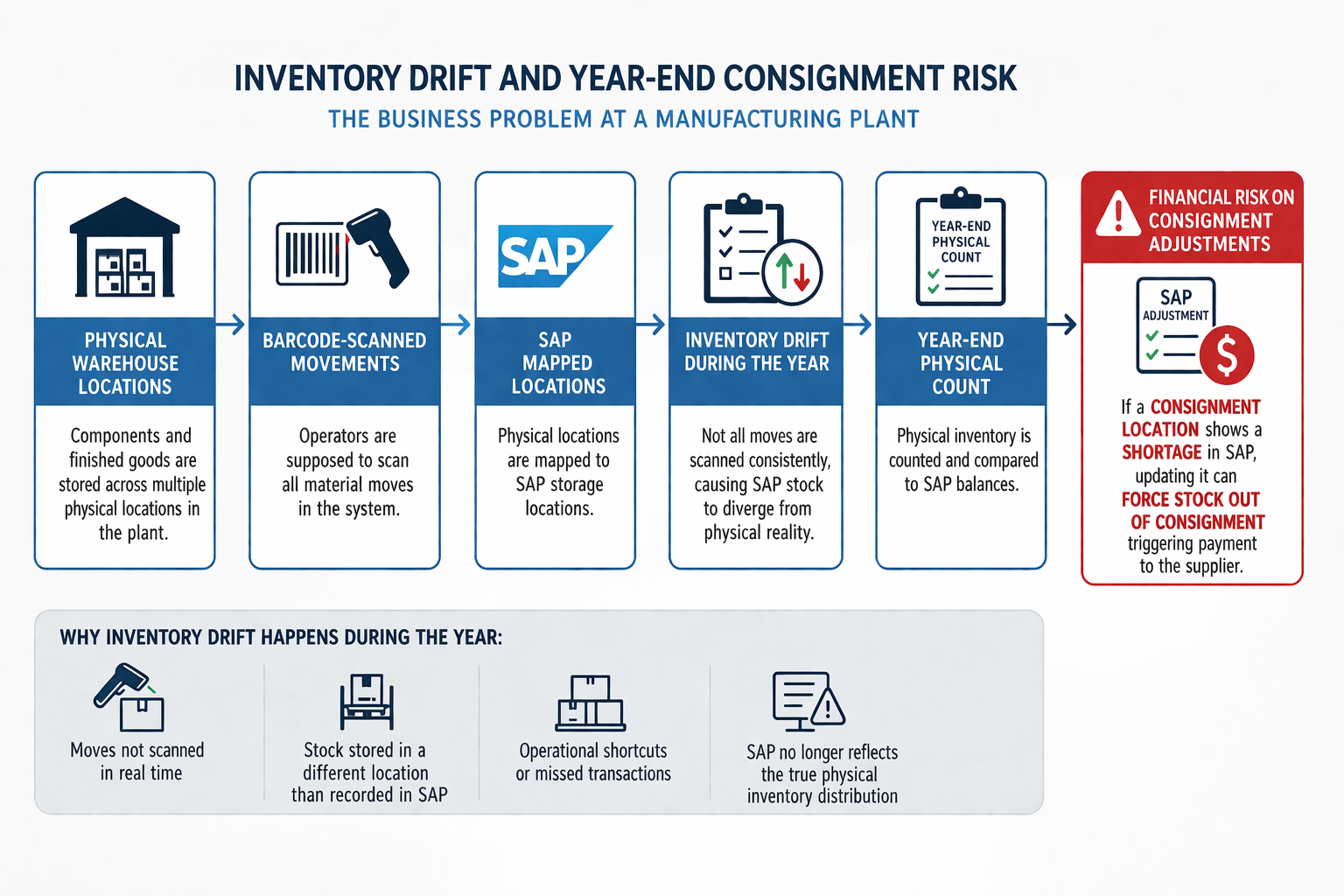
The supply chain team needed a way to reconcile inventory in a financially intelligent manner.
The objective was not just to make SAP match the physical count. The objective was to rebalance discrepancies across the entire network of locations so that shortages would first be absorbed by any available excess in non-consignment inventory, and only as a last resort affect consignment stock.
This was a perfect candidate for optimization.
Solution
To solve the problem, we designed and implemented an inventory reconciliation algorithm using Alteryx and the R linear programming framework for transportation problems.
The approach modeled the reconciliation as a minimum-cost flow problem across the network of warehouse locations.
SAP-recorded inventory by location was treated as the available supply. Physical counted inventory by location was treated as the required demand. The algorithm then determined the lowest-cost reallocation of stock needed to align the SAP system with physical reality.
The key to making the model useful was the cost matrix.
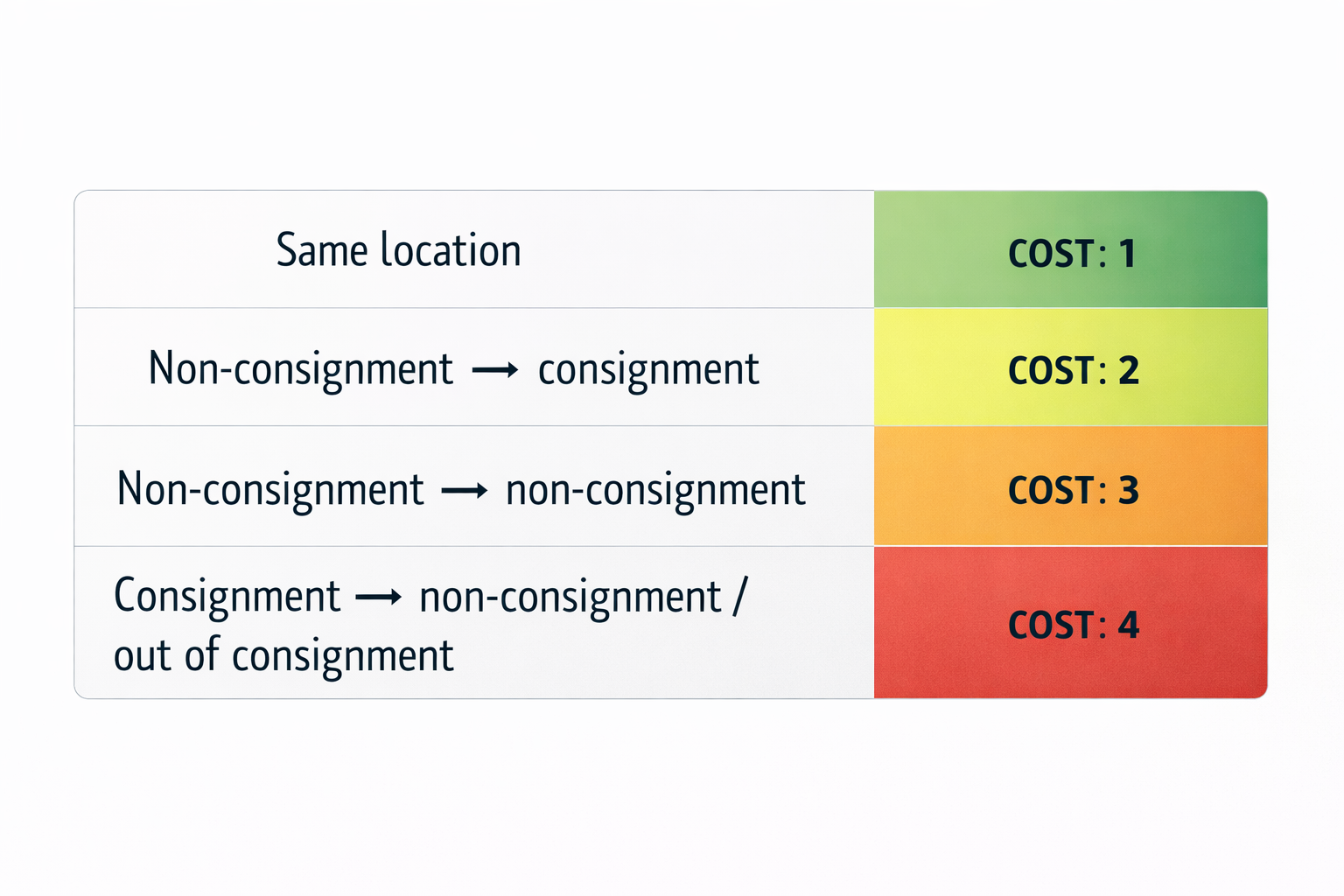
Rather than using physical transport distance as the optimization objective, we defined artificial costs that reflected the plant's financial priorities:
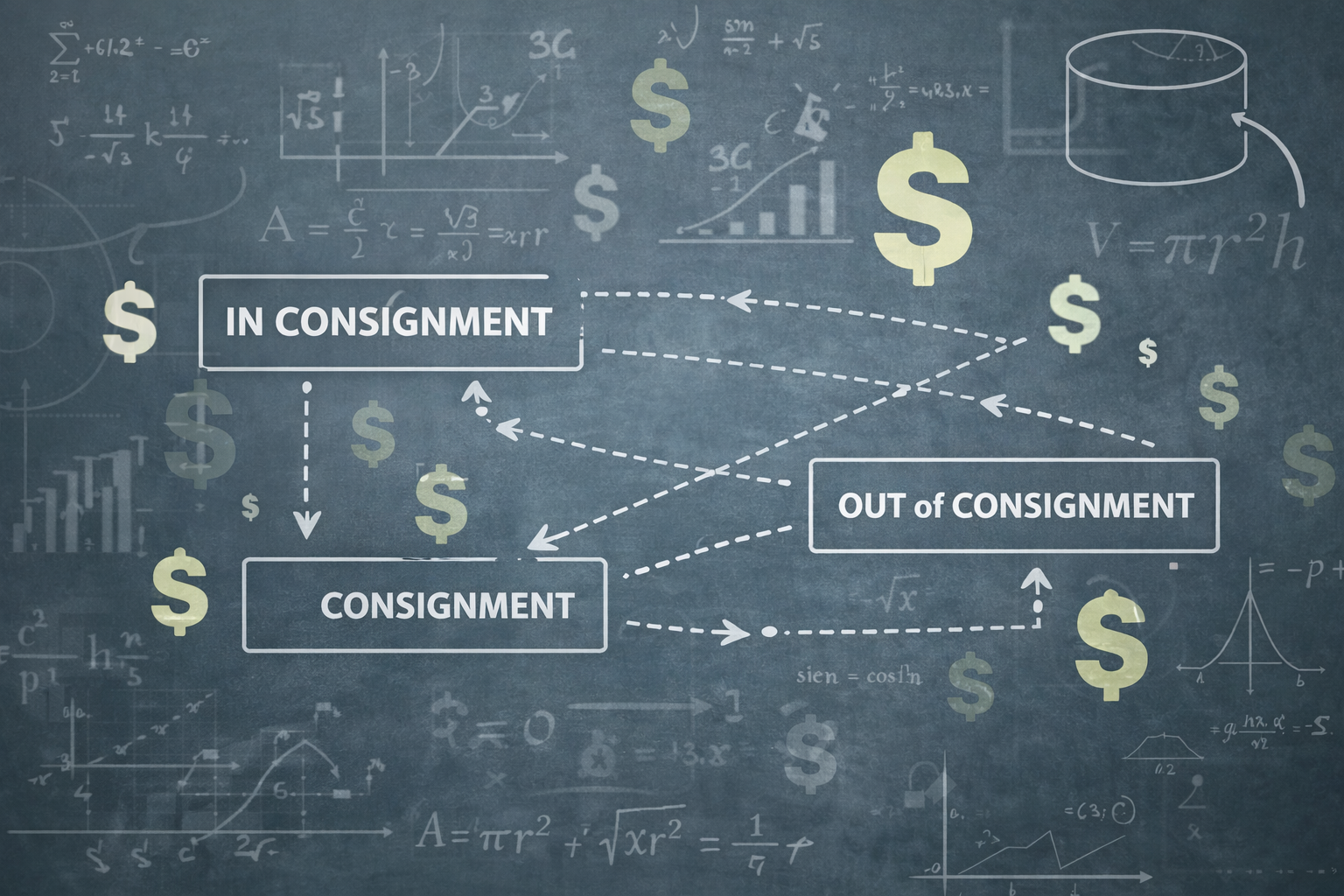
- Keeping stock in the same location had the lowest cost, because no correction was needed.
- Moving stock from non-consignment locations into consignment locations had the next lowest cost, because this helped cover shortages in consignment without triggering unnecessary supplier payment exposure.
- Moving stock between non-consignment locations carried a higher cost, because it solved the discrepancy but did not directly protect consignment balances.
- Pulling stock out of consignment was assigned the highest cost, making it the last resort in the optimization.
This allowed the model to optimize for financial protection first, not simply for minimal operational movement.
Handling Missing Inventory
A key part of the solution was dealing with stock that could not be physically matched anywhere in the warehouse.
In situations where total physical inventory was lower than what SAP showed across the network, the algorithm created a virtual phantom location to absorb the shortage. This represented stock that was effectively missing, whether due to scanning errors, misplacement, theft, or other causes.
By introducing this balancing node, the optimization could still solve the full reconciliation problem across all locations while clearly isolating the truly unrecoverable discrepancy.
This was important because it prevented the plant from incorrectly assigning unavoidable losses to consignment locations when excess stock was still available elsewhere in non-consignment areas.
How the Algorithm Worked
The process began by calculating the difference between physical count results and SAP-recorded balances at each mapped location.
From there, the model solved for the lowest total movement cost across the network, using the financial cost logic described above. The output was not just an analytical summary. It was a practical action plan.
For each material and location combination, the algorithm produced the exact stock movements that should be posted in SAP and, where needed, the corresponding physical movements that should be performed in the warehouse.
This transformed the year-end reconciliation process from a manual balancing exercise into a mathematically optimized decision framework.
Instead of treating each shortage locally, the plant could reconcile inventory globally across the network of locations and choose the least financially damaging path.
Business Impact
The optimization algorithm enabled the Bucharest turbocharging plant to close the fiscal year with the lowest known level of consignment stock being pulled into ownership, according to the supply chain team.
This had a direct working capital benefit. By protecting consignment balances wherever possible, the model helped avoid unnecessary inventory capitalization and reduced the financial burden associated with reconciliation.
Beyond the financial result, the solution also gave the plant a repeatable and transparent methodology for handling one of the most sensitive inventory processes of the year. It turned a high-stakes manual reconciliation exercise into a structured optimization process grounded in business rules.
What made the solution especially effective was that it respected the realities of the operation. The warehouse was not assumed to be perfect. Scanning gaps, misplaced inventory, and system drift were treated as real-world constraints. Instead of trying to eliminate that complexity during the year, the model managed it intelligently at the point where the financial consequences mattered most.
| Scenario | Consignment stock pulled | Working capital impact |
|---|---|---|
| Standard local reconciliation | High | High |
| Optimized reconciliation | Lowest known | Significantly reduced |
Why This Solution Worked
The success of the project came from aligning the mathematics with the business objective.
A standard inventory balancing process might focus on correcting discrepancies location by location. A standard transport optimization might focus on minimizing physical movement. Neither of those approaches would have solved the actual problem.
The plant's real priority was financial: avoid pulling stock out of consignment unless there was absolutely no other feasible balancing option.
By encoding that business priority directly into the optimization costs, the algorithm delivered decisions that matched what finance and supply chain both cared about. It did not just reconcile inventory. It reconciled inventory in the economically smartest way possible.
Technologies and Tools
Alteryx, R, SAP inventory records, Physical count data, Warehouse barcode scanner movement history
Final Outcome
This project demonstrated how operations research and data analytics can create immediate value in manufacturing environments where inventory accuracy has direct financial consequences.
By combining SAP inventory data, physical count results, and a cost-driven optimization model, the plant was able to minimize consignment exposure, protect working capital, and complete year-end reconciliation using the lowest known financially adverse adjustment pattern achieved by the supply chain team.
It was not just an inventory correction exercise. It was a decision optimization system for one of the plant's most expensive year-end risks.