Travel & Tourism Data Analytics
Data architecture for the industry's agentic retailing shift
Airline retailing is going through its biggest data shift since electronic ticketing, just as AI agents start shopping for travel. We are the vendor-neutral data, analytics, and AI partner that makes it all work together, for airlines, OTAs, and travel-tech companies.
Contact Us
An Industry Mid-Migration, Meeting AI Agents
Two transformations are colliding in travel, and both land on your data.
The supply side is migrating
Fifty years of PNRs, e-tickets, and EDIFACT are giving way to IATA’s 100% Offers and Orders vision. Old and new will run side by side for years.
The demand side is automating
AI agents already shop, book, and service travel, at request volumes offer engines were never designed to absorb.
The middle is up for grabs
Retailing platforms, caches, and agentic APIs arrive vendor by vendor. Someone has to make the data and the economics coherent across all of them. That is where we work.
We sell no platform, so our only interest is that yours fit together and that the numbers prove it. New to the space? Start with our introduction to travel data analytics.
The Four Shifts Reshaping Travel Data
From EDIFACT & GDS to Offers and Orders
The industry is migrating from filed fares, PNRs, e-tickets, and EMDs toward NDC and ONE Order: rich, airline-controlled offers and a single order record from shopping through settlement. Most carriers and sellers will run old and new in parallel for years, and the integration burden lands on IT.
From Point-to-Point Messaging to Event Backbones
Decades of store-and-forward messaging and bilateral integrations are giving way to shared, event-driven infrastructure, with IATA’s Project Gaia proof of concept demonstrating an encrypted, content-blind data bus between airlines and airports. Operational data is becoming streaming data.
From Human Shopping to AI Agent Shopping
A human shops a few dozen times per booking. An AI agent comparing dates, airlines, and cabins can generate hundreds to thousands of shopping calls for the same single booking. Offer engines and distribution economics were never designed for that ratio, which makes caching architecture a board-level topic.
From Implicit Trust to Verifiable Identity
Verifiable credentials are entering distribution (identifying the real selling agency behind aggregators) and the passenger journey (wallet-held digital passports, biometric touchpoints). Trust is moving from network position and contracts into the data itself.
What We Do for Airlines, OTAs & Travel-Tech
AI Agent & MCP Implementations
Governed, deterministic MCP interfaces that give AI agents answers, not raw records: closed contracts, explicit business definitions, and human-gated commitment for high-consequence actions. We run agentic automation in production for clients today and expose our own product to AI agents through MCP.
Read more →Passenger & Customer Operations AI
Document and case automation for passenger-facing operations: OCR and LLM extraction of complaint forms and claims, classification into your official taxonomies, case triage and enrichment, and mandatory human review before anything is committed. We built exactly this for a European flag carrier.
Read more →Shopping Economics & Offer Freshness Analytics
Independent measurement of what distribution really costs and how fresh your offers really are: look-to-book per channel, cache hit rates and offer age, repricing variance against live polling, GDS surcharge and NDC share economics, and conversion by offer source. Intelligent caches are becoming products; we instrument whether yours earns its keep.
Read more →NDC & ONE Order Data Readiness
Standards-aware architecture and data support for retailing programs: canonical mapping of your offers and orders, partner-schema harmonization across NDC versions, automated contract testing, data dictionaries and lineage, and the instrumentation around whichever retailing platform you select. We help you integrate and validate; we do not sell a platform.
Read more →Demand Forecasting & Revenue Analytics
Seasonality, booking-curve, and occupancy analytics for hotels, OTAs, and tourism operators. Forecasting models and revenue dashboards built on your booking history and market signals.
Read more →Fleet & Operations Dashboards
Utilization, profitability, and operational KPIs for car rental marketplaces and travel operators, from raw backend databases to executive dashboards. We built the analytics stack for a car rental marketplace end to end.
Read more →Travel & Tourism Case Studies
Explore real projects where we delivered measurable outcomes in this industry.
Showing 2 case studies
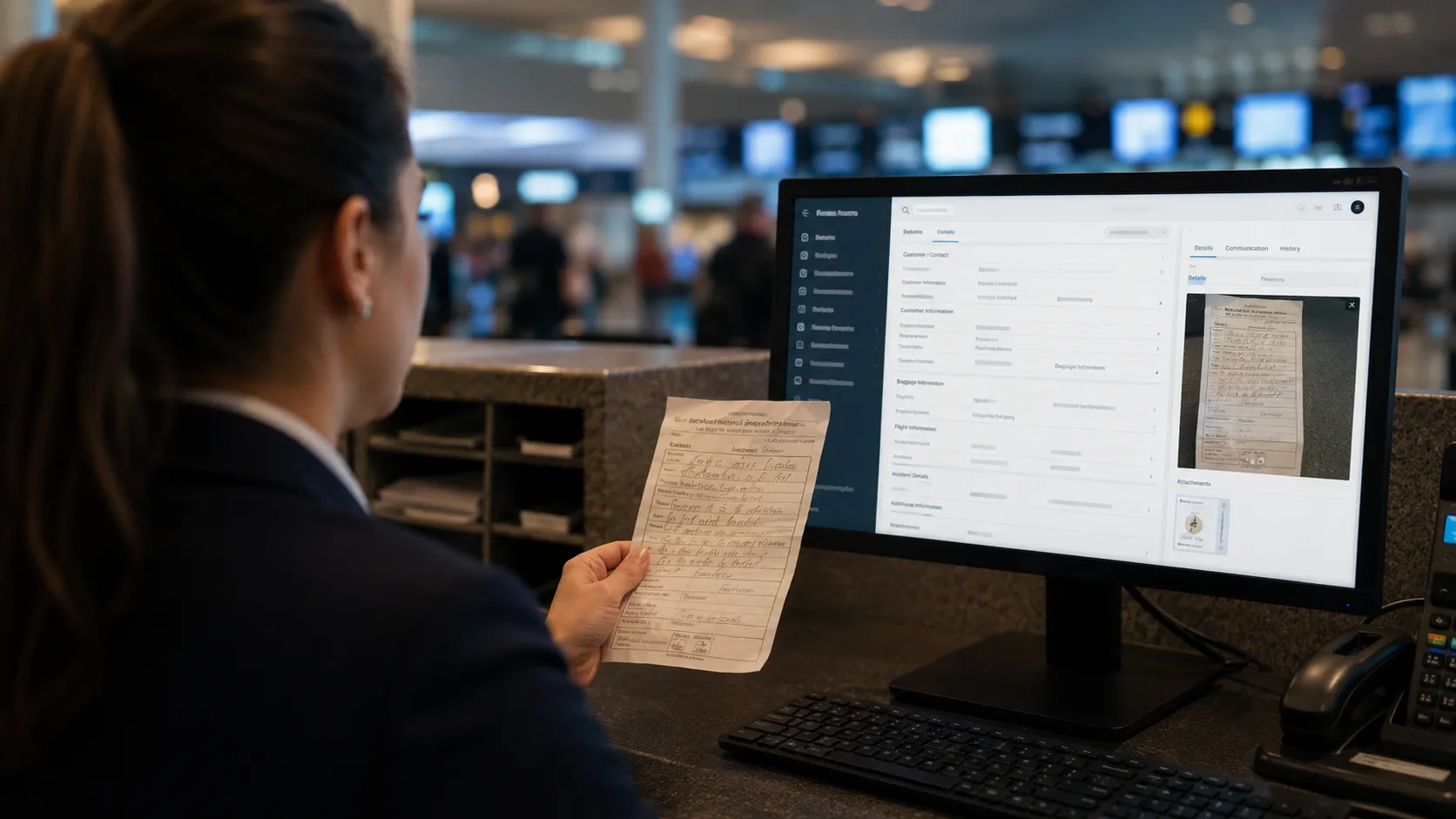
Airline Complaint Digitization: Handwritten Forms and Web Intake to Zendesk with OCR and GPT-4
How we built a 2023 proof of concept for a European flag carrier that turns handwritten airport complaint forms and structured web submissions into a single Zendesk ticket stream, using AWS Textract for OCR, GPT-4 as a semantic parser, and a mandatory human review step. Includes how we would build it today.
Read case study →
Car Rental Marketplace BI: Startup Analytics with Power BI
We built the analytics stack for a car rental marketplace using MongoDB, Python, MariaDB, and Power BI to centralize operations and enable data-driven growth.
Read case study →TESTIMONIALS
Witanalytica helped us transition from Excel to a dynamic dashboard, allowing us to view all the relevant data and the KPIs that we track as a business. Instead of having our developers code an interface for weeks, we can now instantly accomplish this process through an interface, eliminating the need for manual coding.

Radu Albastroiu
Startup Founder, masinilacheie.ro
Your Goals, Our Expertise
We start from your strategic objectives and work our way back to the right mix of solutions and technologies, not the other way round.
Book a Consulting CallFrom Blueprint to Build
We map your current landscape: PSS and booking systems, partner schemas, NDC versions in play, channel economics, and where AI agents will hit your stack first. You get a clear gap analysis against where the industry is heading.
We define the governed data model of your offers, orders, services, and identities, plus the mapping rules to every partner schema and standard version you must support. One model, many projections.
We design the MCP/API contracts AI agents will consume (deterministic, closed, documented) and the offer-caching architecture with explicit freshness budgets and a live commitment boundary.
We build and deliver: integrations, pipelines, dashboards, and agent interfaces, as a boutique senior-led team accelerated by AI coding agents. Then we document, hand over, and support.
We map your current landscape: PSS and booking systems, partner schemas, NDC versions in play, channel economics, and where AI agents will hit your stack first. You get a clear gap analysis against where the industry is heading.
When Do You Need Us?
- Your partners run NDC 17.2 through 24.x simultaneously, and every new integration turns into another bespoke mapping project.
- You are planning an Offers & Orders / ONE Order migration and want the target data architecture and vendor-selection criteria defined by someone with no platform to sell you.
- Leadership is asking when AI agents will be able to sell your inventory, and you don’t yet have a governed API or MCP answer.
- Shopping volumes and offer-engine compute costs are climbing faster than bookings, and your caching strategy is ad hoc.
- You cannot cleanly report what each distribution channel really costs you per booking, or where your look-to-book ratio is heading.
- You aggregate content from many suppliers (airlines, hotels, cars, ancillaries) and maintain a separate mapping for every single one.
Why Choose Witanalytica for Travel Data?
Aerospace Engineering Roots
Witanalytica’s founder is an aerospace engineer turned data and analytics consultant. Aviation’s constraints, vocabulary, and respect for operational reality are native ground, not a new vertical.
Canonical Modeling at Extreme Scale
We built and ran a canonical data hub spanning 2.2 billion identity records on a MongoDB cluster, normalizing dozens of heterogeneous purchased and licensed feeds we could not govern at source. That is the same problem airlines face with partner schemas they don’t control.
Standards-Interface Experience
Our founder worked in advanced-manufacturing workshops standardizing equipment-supplier data interfaces for efficiency and quality monitoring. Supplier-interface standardization is the same problem class as industry data standards.
One Model, Two Projections, in Production
We have built and operate production software that maps heterogeneous data sources into a single canonical model, exposed through governed, deterministic API and MCP interfaces for AI agents. The pattern airline retailing needs is one we already run.
Governed AI Access, Documented
We literally wrote the whitepaper on designing MCP servers for business analytics: how to give AI agents governed answers instead of raw table access. The same discipline applies to offers and orders, and the full guide is free to download right below this section.
Boutique, Senior-Led, AI-Accelerated
No junior bench, no staff augmentation, no enterprise-vendor overhead in the rate. A senior architect leads every engagement and AI coding agents accelerate delivery, so definition-phase thinking and build-phase execution come from the same people, at boutique economics.
Technical whitepaper
A CIO guide to trusted analytics interfaces for AI agents
This companion whitepaper is written for CIOs, CTOs, and data leaders evaluating AI-agent workflows that touch revenue, billing, operations, manufacturing, and supply chain decisions. It explains why connecting an assistant to business applications is not enough, and how to expose governed analytics answers.
Designing MCP Servers for Business Analytics
A practical whitepaper for leaders designing agent-ready analytics interfaces, including concrete examples for:
- Retail & E-commerce Analytics
- Manufacturing Data Analytics
- Logistics & Supply Chain Analytics
PDF format, free to download.
Our Travel & Tourism Analytics Pricing Models
Transparent pricing built for long-term partnerships, not one-off transactions.
On-Demand Expertise
All tasks are tracked, and the corresponding invoice of the delivered services is billed monthly.
| Activity | Hourly Rate |
|---|---|
| AI Agents Development and Implementation | $100 |
| Data Engineering & Database Administration | $110 |
| Business Intelligence Reporting | $90 |
| Data Science | $120 |
Reserved Capacity Agreement
- Pre-purchase a package of monthly working hours that guarantees reserved capacity and priority availability, regardless of our workload.
- Because this capacity is exclusively allocated to you, unused hours do not carry over to the following month.
| Hours Package | Price |
|---|---|
| Every 50 hours | $4,500 10% savings |
Alternatively, we also offer project-based pricing
For well-defined engagements, we scope the full project upfront and agree on a fixed fee, so you know exactly what to expect.
Travel & Tourism Data FAQs
NDC (New Distribution Capability) is the IATA XML standard, launched as Resolution 787 in 2012, that lets airlines distribute rich, dynamically priced offers (branded fares, ancillaries, bundles) through any channel. Traditional GDS distribution relies on decades-old EDIFACT messaging and filed fares, which cannot express modern retailing concepts. Most airlines run both in parallel today, which is exactly why a harmonization layer matters.
ONE Order is the IATA standard that collapses the PNR, e-ticket, and EMD into a single order record: one reference carrying the customer, the services purchased, payment, and fulfilment status through delivery and accounting. NDC covers how an offer is shopped and ordered; ONE Order is the living record of what was bought. They are two halves of the same retailing transformation.
AIDM (Airline Industry Data Model) is IATA’s canonical data model, from which both the NDC XML schemas and the Open Air JSON/OpenAPI specifications are generated. It matters because it demonstrates the pattern every travel IT estate needs internally: define meaning once in a governed model, then generate per-format, per-partner projections, instead of maintaining a web of bespoke mappings.
Shopping works: with a connected API or MCP interface, an agent can search and price real offers today. Buying is where it stops. Payment needs separate agentic-commerce protocols and mandates, a non-refundable purchase is precisely the kind of high-consequence action that should stay human-confirmed, and offers expire quickly, so the commitment step must always be re-priced live. Designing that governed flow (cached exploration, live human-gated commit) is a core part of what we do.
No. We work with airlines, OTAs, TMCs, hotels, car rental companies and marketplaces, airports, and travel-tech vendors. The airline standards stack is the deepest specialization, but the underlying disciplines (canonical modeling, caching, governed AI interfaces, revenue analytics) apply across the industry.
No, and we would not suggest it. We do not sell a retailing platform, an aggregator, or an order management system, and we have no reseller arrangements to steer you toward one. Our work is the layer between the systems you already chose: canonical data semantics, integration validation and testing, analytics instrumentation, and AI-agent interfaces. Every new platform in your estate increases the need for that independent layer, not the reverse.
Not yet, and we will not pretend otherwise: that space belongs to established retailing platform vendors, and several do it well. Our track record is in the disciplines around those platforms: canonical data modeling at very large scale, AI agents running in production for clients, machine learning and analytics delivery, and a working airline document-automation proof of concept for a European flag carrier. We have studied NDC, ONE Order, and AIDM deeply enough to publish detailed technical analysis of them, and we bring that standards literacy to the data, testing, and AI work that platform projects leave on the table.
Yes. An MCP interface for AI agents is typically a governed layer over your existing services: it exposes deterministic, documented capabilities with business definitions baked in, rather than raw endpoints. We design the contracts, the caching in front of expensive operations, and the guardrails that keep agents from committing to things they should not.
Every airline offer is computed by a real-time pricing engine, and every shopping request costs compute. AI shopping agents multiply request volumes by orders of magnitude while bookings stay flat, so serving agents economically requires caching normalized offer content with explicit freshness rules, and re-pricing live only at the moment of booking. Get the cached unit wrong and you either mis-price bookings or melt your offer engine.
An inventory of your booking and distribution systems (PSS/OBE, channel managers, aggregator APIs)
Sample payloads from the partner schemas and NDC versions you support
Booking, revenue, and channel-mix history for analytics work
Your current API/interface documentation, if any
The business definitions your teams already agree on (and the ones they don’t)
We offer two engagement models with transparent pricing.
On-Demand Expertise
All work is tracked and billed monthly at hourly rates:
- AI Agents Development and Implementation - $100/hr
- Data Engineering & Database Administration - $110/hr
- Business Intelligence Reporting - $90/hr
- Data Science - $120/hr
Reserved Capacity Agreement
- Pre-purchase a 50-hour monthly package at $4,500 (10% savings)
- Guaranteed priority availability regardless of our workload
We also offer project-based pricing for well-defined engagements.
Contact us to discuss the best fit for your needs.
Related Articles
Analysis and guides for travel and airline IT leaders.
5 articles

Who Is Actually Booking Travel with AI Agents? The Production Reality, August 2026
A dated survey of AI travel agents that really transact in production: IndiGo, Otto, Mindtrip, Navan, Sabre MCP. What the working ones share is not a smarter model. It is bounded authority, deterministic APIs, and human gates.

From Look-to-Book to Compute-to-Order: AI Agents Meet Airline Distribution Economics
AI shopping agents multiply airline shopping volumes by orders of magnitude while bookings stay flat. The only economically viable answer is caching the offer itself, with live re-pricing at commitment. Here is the framework.

AIDM, NDC, ONE Order, Open Air: The Airline Standards Map for IT Leaders
IATA's standards are not competing formats. They are one canonical model (AIDM) with governed projections: NDC XML, Open Air JSON, ONE Order. Here is the map, and what it teaches about your own integration layer.

Why Airline IT Looks the Way It Does (and Why That Was the Right Call)
Airline IT solved distributed interline settlement decades before distributed systems existed. The ticket was a bearer instrument, and that one fact explains PNRs, EMDs, and why ONE Order is only possible now.
A Deep Dive into Travel Data Analytics
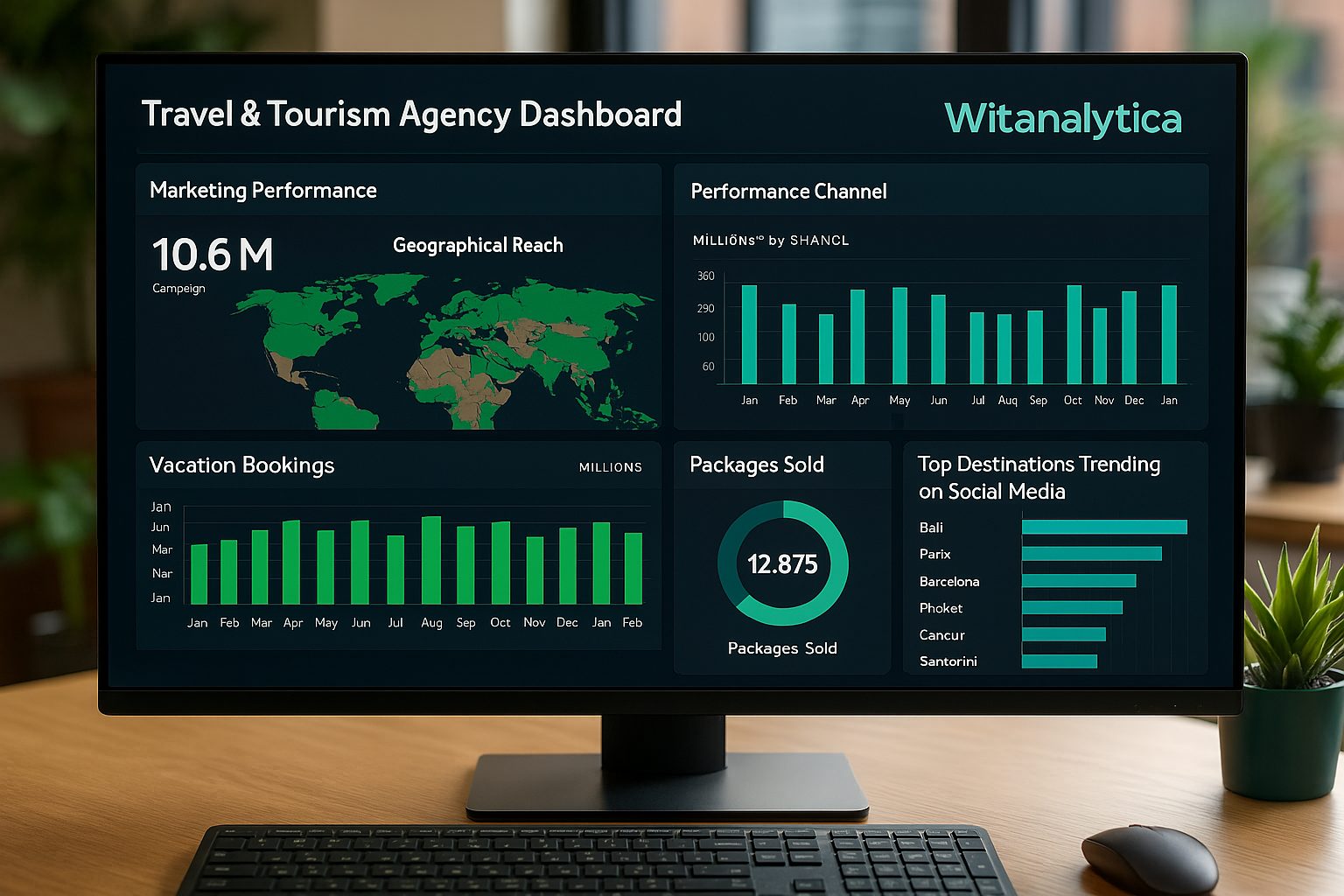
From personalized customer experiences to enhanced operational efficiency, travel data analytics is revolutionizing the travel and tourism industry.